Let’s start with a familiar scene: a nurse rushes to find a stretcher for a critical patient, only to realize it’s gone. Minutes tick by. A defibrillator? Nowhere to be found. Medication? Delayed in transit.
This isn’t just frustrating. It’s life-threatening.
From misplaced infusion pumps to delayed ambulance dispatch, poor asset tracking doesn’t just waste time — it disrupts care. Staff scramble. Patients wait. Lives hang in the balance.
And the worst part? It’s not rare. It’s systemic.
The global healthcare asset management market is expected to hit $68 billion by 2032, growing at more than 19% annually. That growth isn’t about luxury upgrades — it’s a lifeline for a system drowning in delays and disconnection.
Because when a monitor fails, a medication spoils, or a fleet vehicle breaks down mid-route — patients pay the price.
Here’s how smarter visibility is helping healthcare organizations stop the bleed — not just financially, but operationally and clinically.
Equipment Gaps Delay Critical Care
A doctor orders a ventilator. An ICU nurse searches for it for 10 minutes.
That’s 10 minutes a patient doesn’t have.
From emergency departments to operating rooms, critical medical tools must be available — not just in theory, but in real time. Yet many healthcare facilities still rely on manual checklists, siloed inventory systems, or physical sign-outs to manage essential gear. The result? Equipment sits unused, lost, or double-booked.
Advanced tracking systems like RFID and IoT-enabled tags have already shown measurable results in closing this visibility gap — improving equipment utilization, reducing losses, and supporting better patient outcomes. Hospitals that adopted these tools report faster access to high-use assets and fewer delays during care.
For example, when an ICU nurse spends 10 minutes searching for an available ventilator, that’s not just a workflow issue — it’s a care delay.
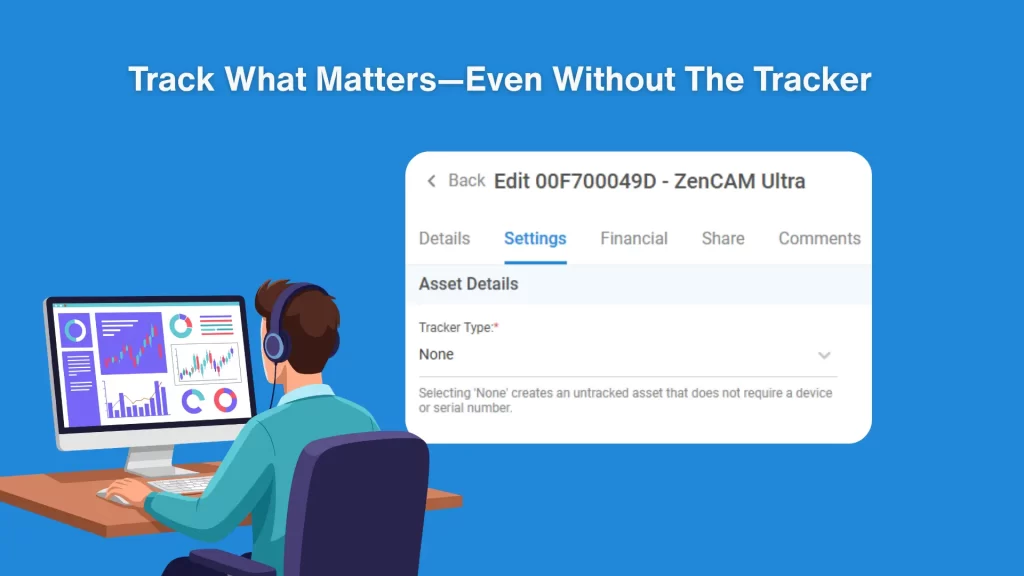
ZenBeacon systems can support this visibility by tagging high-value equipment like wheelchairs, oxygen tanks, and mobile monitors — helping care teams instantly locate and track assets without extra paperwork or manual effort.
This isn’t about reducing budgets. It’s about reducing the time between when care is needed and when care can be delivered.
Temperature-Sensitive Medications Need Better Monitoring
Certain medications — including insulin, vaccines, and many chemotherapy drugs — must be stored and transported within strict temperature ranges. A single deviation in cold chain storage can render them ineffective or even dangerous.
Yet many healthcare fleets still depend on manual checks or inconsistent monitoring tools. That gap in visibility leads to costly waste, compliance risks, and worst of all — compromised patient care.
The World Health Organization estimates that cold chain failures result in over $35 billion in annual losses — often due to preventable issues like faulty refrigeration, missed temperature alerts, or undetected equipment malfunctions.
Tools like ZenTemp offer a waterproof, IP67-rated solution for real-time temperature and humidity tracking — ideal for refrigerated medicine transport in rugged conditions. By equipping medical transport vehicles and storage units with ZenTemp, healthcare providers can maintain cold chain integrity from warehouse to bedside.
Supply chain analytics combined with smart tracking dramatically improves planning, reduces disruptions, and enhances compliance.
It’s not just about saving products. It’s about delivering safe, effective treatment — every time.
Emergency Fleets Can’t Afford to Fly Blind
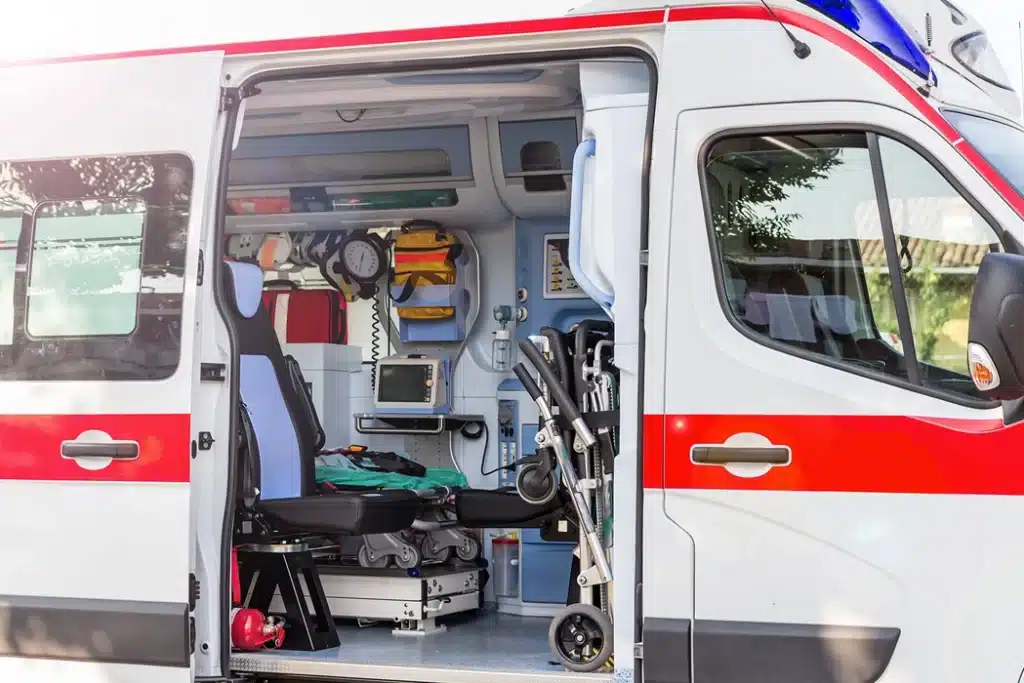
When every second counts, a broken-down ambulance isn’t just an inconvenience — it’s a liability.
Emergency medical services (EMS) face enormous pressure to arrive on time, every time. But aging fleets, poor maintenance visibility, and unpredictable dispatch coordination continue to undermine reliability and response time.
Breakdowns in ambulance fleets have made headlines for delaying care and putting both patients and EMS workers at risk. At the same time, vehicle reliability and maintenance remain top challenges cited by emergency medical staff — who often face operational gaps while managing life-or-death scenarios.
With real-time GPS tracking and maintenance alerts, healthcare fleets can get ahead of these issues — keeping assets online and ensuring dispatchers know what’s available in real time. When combined with predictive maintenance tools, this visibility cuts downtime, prevents route delays, and improves patient outcomes.
Solutions like ZenduONE Maintenance streamline service scheduling, automate inspection logs, and centralize repair workflows — helping EMS providers avoid avoidable breakdowns and meet compliance demands without manual tracking.
When fleet managers can see what’s failing — and fix it before it fails — emergency care gets where it’s needed faster.
That’s how real training sticks.
Compliance & Visibility Still Clash
Healthcare fleets face a tough double bind: they’re expected to meet strict regulatory requirements for equipment, vehicle safety, and patient privacy — while also proving it, often in real time.
Yet many still rely on paper logs, siloed databases, or outdated tools to manage compliance tasks. And that fragmentation creates gaps. A broken stretcher that’s logged but not flagged. A missing oxygen tank that was last “seen” two shifts ago. A cold storage log that never got submitted.
The stakes are high. Regulations around medicine transport, medical waste handling, and patient transfer are only getting more complex. Meanwhile, real-time visibility into healthcare asset status is now a baseline expectation — from both regulators and patients.
One regional EMS provider moved away from paper forms and now uses smart digital forms to track vehicle inspections, equipment checks, and daily compliance reports. Connected directly to their vehicle tracking and maintenance tools, these forms trigger alerts for missed checks, store timestamps automatically, and generate audit-ready reports — no more chasing signatures or digging through clipboards.
When forms talk to systems, compliance stops being a burden — and becomes a source of operational insight.
Communication Gaps Break the Chain of Care
When healthcare teams can’t talk to each other clearly, care suffers.
Dispatchers, drivers, nurses, and techs often operate in disconnected systems — or worse, no system at all. That leads to rerouted vehicles showing up late, patient handoffs that fall through the cracks, and supply runs that get duplicated or missed entirely.
One medical transport fleet resolved this by implementing in-cab two-way voice communication. Now, dispatchers can give real-time updates, confirm patient readiness before arrival, and reroute vehicles mid-trip — all without waiting for a callback or playing phone tag.
With two-way driver communication built into smart dash cams, dispatch teams can connect instantly with drivers via live voice — no additional radios required. Multi-language voice prompts clearly signal when a call starts and ends, reducing confusion and keeping communication hands-free and safe on the road.
When lives are on the line, communication delays aren’t just inconvenient — they’re dangerous. Real-time coordination isn’t a luxury. It’s the backbone of responsive, reliable care.
The Bigger the Fleet, the Harder the Coordination
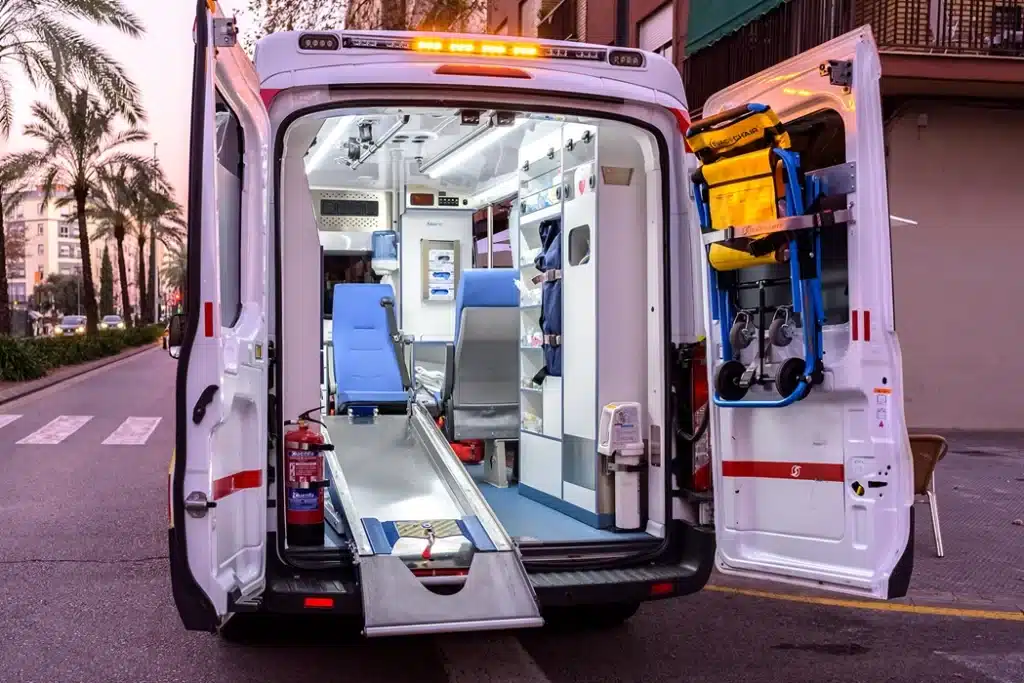
Healthcare systems aren’t getting smaller. From regional hospitals to sprawling networks of clinics, mobile care units, and specialized treatment centers — expansion adds complexity. And without a connected system, that complexity turns into chaos.
As fleets grow, so do the blind spots: underused assets in one region, overbooked equipment in another, and constant calls to figure out what’s available where.
It’s no surprise the healthcare asset management market is projected to reach $39.4 billion by 2033 — a reflection of how urgently the industry needs centralized, scalable tools to manage operations.
One regional health network with 12 campuses tackled this challenge head-on. By adopting a unified fleet and asset tracking platform, they gained real-time visibility across their entire footprint. Equipment was load-balanced between locations, vehicle availability became predictable, and dispatching was done based on actual capacity — not guesswork.
Scalability doesn’t require starting over. It just needs structure. A centralized platform helps healthcare organizations grow without losing control — enabling smarter planning, better resource use, and fewer costly surprises.
Visibility Saves More Than Money
You can’t fix what you can’t see. And in healthcare, that invisibility doesn’t just cost dollars — it costs care.
From missed equipment and wasted medication to delayed arrivals and regulatory fines, the ripple effect of poor visibility impacts staff, operations, and ultimately, patients.
It’s why 48% of U.S. fleets now rank safety and asset visibility as top operational priorities. In healthcare, those priorities aren’t optional — they’re essential.
Want to stop guessing where your critical assets are?
Start with visibility. Your patients — and your teams — will feel the difference.