British Columbia is about to become the first province in Canada to require dash cameras on heavy commercial vehicles. If you run trucks on B.C. highways, that raises a direct question: is your fleet ready?
Bill M217, the Dashboard Cameras in Commercial Vehicles Act, passed third reading in May 2026 with unanimous, all-party support. Once it receives Royal Assent, covered fleets have six months to comply. The full regulations are still being written, but there’s enough here to check where you stand today, and what to do about it before the deadline forces the issue.
This is a developing story. We’re tracking Royal Assent, final technical standards, and enforcement rules as they’re published, and will update this article as new information becomes available.
What is Bill M217?
Bill M217, the Dashboard Cameras in Commercial Vehicles Act, was introduced by MLA Ward Stamer following a string of fatal crashes on Highway 5, and passed third reading unanimously in May 2026. The B.C. Trucking Association isn’t opposed to the idea, but has pushed for a national rule instead of a province-only one, warning about a patchwork across Canada. Even Stamer expects the enforcement details to take six months to a year to sort out. One technical note: committee raised the weight threshold from an earlier 8,200 kg to the current 11,793 kg, so ignore any older references to the lower figure.
Is your vehicle in scope?
Start here. Based on the certified bill text:
- Does your vehicle weigh more than 11,793 kg (roughly 26,000 lbs) gross vehicle weight rating?
If yes, it’s covered. Light-duty pickups and regular passenger vehicles are not. - Do your trucks run into, through, or up to B.C., even occasionally?
The requirement appears to apply based on where a vehicle operates, not where it’s registered. That means U.S. carriers and out-of-province fleets running into B.C. or up the Alaska Highway are likely covered too. - Do you already run a dash cam?
Check it against the actual bill text: forward-facing through the front windshield, 1080p minimum, night vision, at least 72 hours retained, and running at the manufacturer’s default settings rather than a scaled-down configuration. - Is your fleet leased?
This one’s settled by the Act itself: if the vehicle is leased, the installation and maintenance duty falls on you as the lessee, not the leasing company. Worth confirming your leases account for that.
What you need to know right now
This section is now sourced directly from the certified bill text rather than secondary reporting:
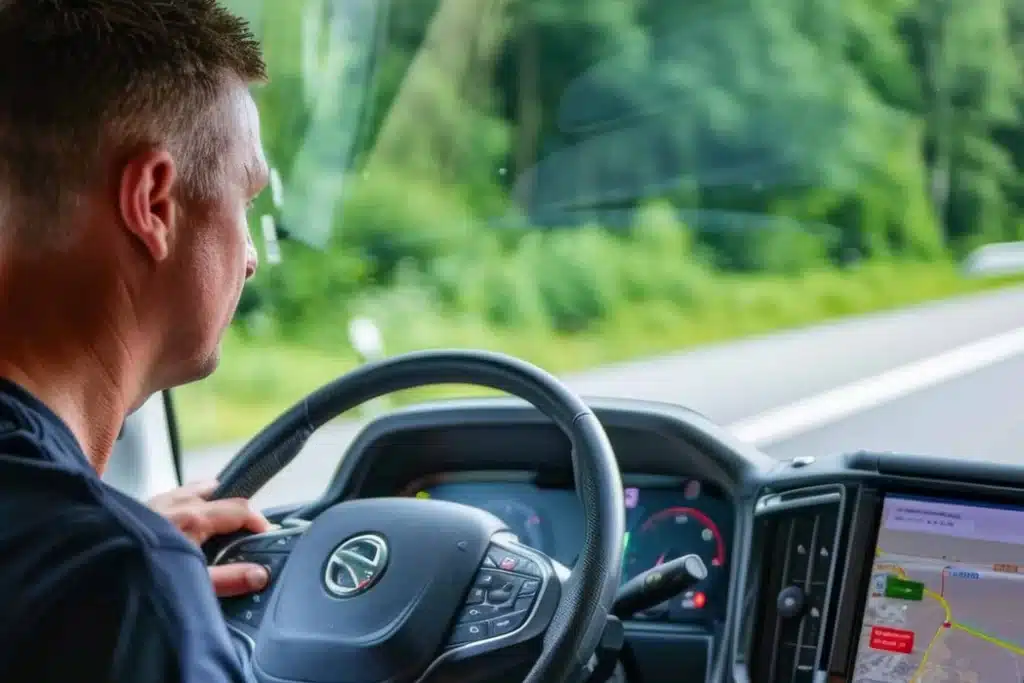
- Camera direction: the camera must continuously record the view of the road in front of the vehicle through the front windshield, at all times the vehicle is operating. Driver-facing cameras are not required, and privacy concerns during committee review are why. This isn’t about watching your drivers, it’s about giving them a witness.
- Recording quality: minimum high-definition video at 1080p resolution.
- Night vision: required.
- Retention: at least 72 hours of recording retained.
- Default settings: the camera must record at the manufacturer’s default settings on its local storage. In plain terms, you can’t dial down resolution or frame rate to stretch storage or cut costs; the device has to run at what it shipped with.
- Installation and maintenance duty: falls on the owner, or, if the vehicle is leased, on the lessee instead. This isn’t a gray area left for you and your leasing company to sort out; the Act assigns it directly.
- Operating duty: separate from the install duty above, the operator (your driver) has to make sure the camera is actually recording while the vehicle is in operation and isn’t obstructed or blocked, subject to whatever regulations follow.
- Privacy: any footage collected must be handled, used, disclosed, retained, and destroyed in line with B.C.’s Personal Information Protection Act and other applicable privacy and security requirements. This is written directly into the Act, not left to be assumed.
- Timeline: commencement is fixed at six months after Royal Assent, locked in by a committee amendment rather than left open-ended. What’s unconfirmed is whether assent has happened yet (see below), and the sponsor himself expects the surrounding regulatory work to take six months to a year, so treat “late 2026 or early 2027” as a realistic window, not a locked date.
What’s still being decided
A few important details haven’t been finalized, so don’t treat any single source, including this one, as the final word yet:
- Royal Assent itself. As of this writing, no source, including the certified bill text, confirms the Lieutenant Governor has actually signed off. Until that happens, the six-month clock hasn’t started.
- Enforcement and penalties. The Act itself only says the Lieutenant Governor in Council may make regulations under the standard enabling provision of the Interpretation Act, it doesn’t spell out fines or out-of-service orders anywhere in the text. Those will come later, likely enforced by the CVSE branch of the B.C. Ministry of Transportation, which already has inspection and enforcement authority for commercial vehicles.
- Exemptions. The Act requires the camera to be recording “subject to any regulations,” which is likely where carve-outs for specialized vocational vehicles (certain construction, forestry, or agricultural equipment, for example) would get worked out. Nothing in the current text names any exemptions directly.
- Final published regulations. The B.C. Trucking Association has convened a Dashcam Task Force bringing carriers and technology suppliers together to give feedback as the government drafts the detailed rules. The BCTA has also flagged that a province-only rule creates a patchwork for carriers running multiple provinces, so watch for whether that pressure shapes the final regulations. That process is active right now, so some specifics could still shift before the law takes effect.
Not sure if your fleet actually qualifies?
Bring us your vehicle list. We’ll map it against the GVWR threshold and show you exactly where you stand before the clock runs out.
How to protect your fleet before the deadline
Waiting for the final regulations before acting is the riskiest option. Once assent lands, every fleet in scope will be sourcing hardware and booking installs at the same time, and lead times don’t compress on demand. Here’s how to stay ahead of it:
- Audit. Know exactly which of your vehicles qualify by GVWR, and which don’t, before you start shopping for hardware.
- Order. Source hardware that clears the proposed spec now, before the industry-wide rush hits.
- Install. Roll out by yard and route so you’re not pulling trucks from revenue all at once.
- Brief. Update your driver policy and let your drivers know what’s recording and why. This matters for trust, not just paperwork.
- Verify. Confirm every vehicle is equipped, recording, and ready ahead of the deadline.
One more thing worth knowing: 72 hours of retention is a floor, not a target. If you ever need footage for an insurance claim or a CVSE investigation, you may need it well past that window. A camera that also ties into GPS and driver data protects you in ways a bare-minimum unit can’t.
How to protect yourself and your drivers
Meeting the mandate is one thing. Actually protecting your fleet, your drivers, and your bottom line is another, and that’s where the right hardware and platform choice matters.
Our AI Cameras & Video Safety lineup covers both ends of that spectrum:
- ZenCAM Plus records at up to 5MP on the road-facing camera, well above the 1080p floor, with low-light performance built for all lighting conditions. It’s dual-channel out of the box and expandable up to six cameras, with a WiFi hotspot and automatic daily cloud upload, so your footage isn’t stuck on an SD card the one time you need it fast.
- ZenCAM Lite meets the 1080p resolution requirement with the same night-ready road-facing camera, in a simpler dual-facing, plug-and-play unit. A solid fit if you’re running a smaller fleet or just want a fast, straightforward rollout ahead of the deadline.
Both models store to dual micro SD cards (up to 1 TB combined) with daily cloud upload, so retention isn’t capped at the regulatory minimum, and both feed into a video-based fleet safety solution that surfaces the moments worth reviewing and gives drivers context, not just a paper trail. A basic consumer dashcam might clear the requirement on day one, but often falls short on retention and reliability over time, and won’t protect you the way a fleet-grade system does when something actually happens. Trulite Glass and Aluminum Solutions saw false insurance claims drop 40% across its 500-vehicle fleet after deploying ZenCAM.
Ready to protect your fleet before the deadline hits?
See how ZenCAM clears the compliance floor today, and gives your drivers real protection long after the mandate takes effect.
Frequently asked questions
What is Bill M217?
Bill M217, the Dashboard Cameras in Commercial Vehicles Act, is B.C. legislation requiring forward-facing dash cameras on qualifying commercial vehicles. It passed third reading in May 2026 with unanimous support.
What vehicles does the BC dashcam mandate apply to?
Commercial vehicles with a GVWR over 11,793 kg (about 26,000 lbs). Light-duty pickups and passenger vehicles are excluded.
Does the mandate require a driver-facing camera?
No. The law requires only a forward or outward-facing camera. Driver-facing cameras were deliberately excluded during committee review over privacy concerns.
When does the BC dashcam law take effect?
Six months after Royal Assent, which had not been confirmed as of this writing. Third reading passed in late May 2026, and the bill’s sponsor has said the regulatory groundwork could take six months to a year, so the realistic compliance window is late 2026 into 2027.
Does this apply to trucks registered outside British Columbia?
Based on the bill’s language, the requirement applies to vehicles operating on B.C. highways regardless of where they’re registered, which would include U.S. and other-province carriers running through the province.
What happens if a fleet doesn’t comply?
Penalties and enforcement mechanisms haven’t been finalized. They’re expected to be set through regulation, likely enforced by the CVSE branch of the B.C. Ministry of Transportation.
What technical specs does a compliant camera need to meet?
Per the certified bill text: forward-facing recording through the front windshield, 1080p resolution minimum, night vision, at least 72 hours of retained footage, and the camera must run at the manufacturer’s default settings on its local storage rather than a scaled-down configuration.
How can fleets prepare before the final regulations are published?
Audit vehicles by GVWR, check existing hardware against the bill’s technical requirements, and start sourcing and scheduling installation early rather than waiting for the final enforcement rules, since demand for hardware and installers will spike once the compliance clock starts.
Is a consumer dashcam enough to comply?
It might clear the requirement on day one, but consumer units often fall short on retention, night vision, and long-term reliability. The footage is only useful if it’s actually there when you need it, and a camera built just to avoid a ticket isn’t built for that.
Who’s responsible for installing the camera if my truck is leased?
The lessee, not the owner. The Act specifically shifts the installation and maintenance duty to the lessee for leased commercial vehicles, so it isn’t something you need to negotiate with your leasing company, it’s already settled in the law.